We’re no strangers to walking with backpacks. In fact, we’ve been doing it for most of our lives. Back when we were kids, though, the focus was always on how we used them. Don’t carry it on one shoulder, we used to hear. On TV and in newspapers, the concern was the weight of the books and the effect they might have later on. Don’t overload them. And don’t forget your posture.
That was a long time ago. Fast forward a few years, and now we’re willingly putting backpacks on again. Only this time, it’s on purpose. Thanks to a growing trend called rucking, more people are using it as a simple way to build strength and endurance. But what exactly is rucking, and is it worth a try? Let’s find out.
What is rucking?
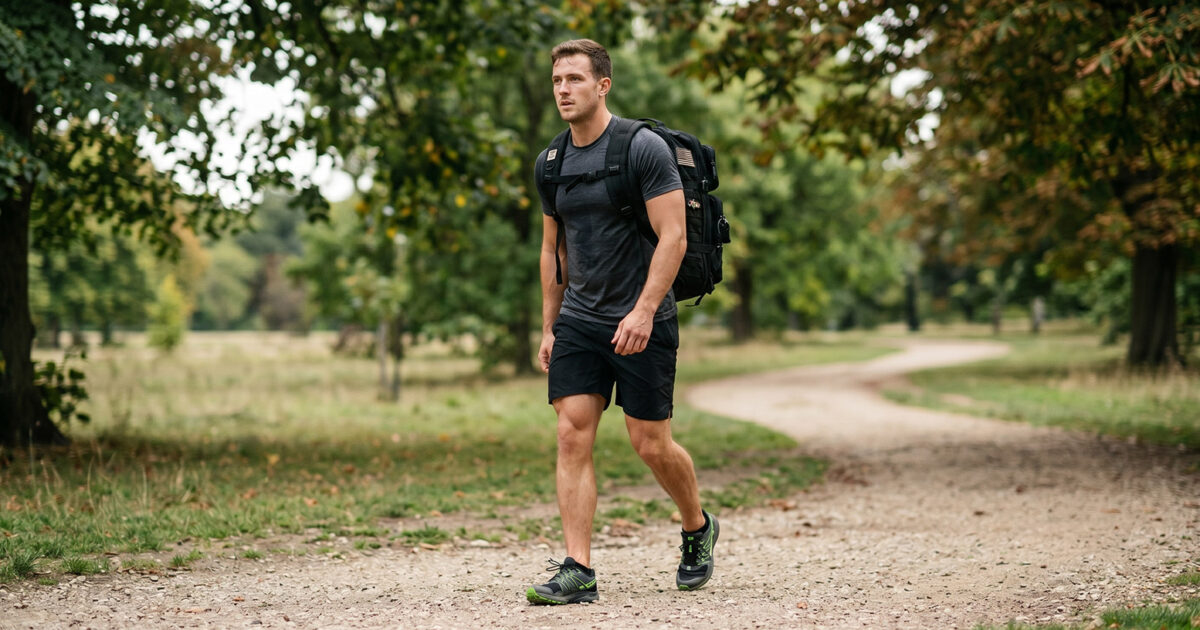
As you’ve probably guessed by now, rucking is essentially walking with a heavy load on your back, usually in the form of a backpack filled with anything from a few kilos to more challenging weights.

The principle is similar to using a weighted vest, but rucking shifts the load to your back, which changes how your body stabilises and moves.
This military term originated in the United Kingdom and is derived from the German words “Rücken” (meaning “back”) and “Sack” (meaning “bag”). So, in its origin, it’s exactly what it sounds like: carrying weight on your back.
A not-so-new trend
While TikTok can make it feel like a new trend, rucking is far from new. Variations of it date back to the Roman Empire, where soldiers were required to complete long marches carrying heavy loads before even handling weapons. The goal was simple: build endurance, resilience, and the ability to move efficiently as a group.
And it’s so effective that it’s still employed today. In fact, many military forces use loaded walking as part of their training. The best part? You can do it too — no military background required.
Benefits of rucking
1 – Builds strength and endurance
Rucking sits somewhere between strength and cardio. Carrying weight increases the demand on your muscles, while walking keeps your heart rate elevated. The result is a steady and effective way to build both.
2 – Low impact, high return
Compared to running or high-intensity training, rucking is easier on the joints. You still get a solid workout, but with less stress on your knees and hips. That makes it a good option for longer sessions or active recovery days.
3 – Improves posture
Carrying weight properly forces you to stay upright. Your core engages, your shoulders align, and your body supports the load. Over time, this helps improve overall posture and body awareness.
4 – Accessible and flexible
No complicated setup. No fixed location. All you need is a backpack and some weight. You can do it outdoors, on your way to the gym, or even as part of your daily routine.
5 – Builds mental resilience
There’s something simple about putting on a backpack and walking with it. It’s not flashy, and it’s not quick. But that’s the point. Rucking teaches you to stay consistent, manage discomfort, and keep moving.