Everyone remembers the feeling: you join a gym and progress comes quickly. You start lifting heavier weights, running faster, recovering well, and you even notice visible changes in your body. Then, at some point, things stall. You can’t seem to add weight to the bar, your workouts start to feel repetitive, and the physical changes you once noticed become harder to see.
If that sounds familiar, you’re probably dealing with a workout plateau. There are several ways to overcome them — and we discussed them before. Another solution worth mentioning is physiotherapy. But how can this therapy help you break a workout plateau? That’s what we’re about to find out.
Physiotherapy is no longer just for injuries
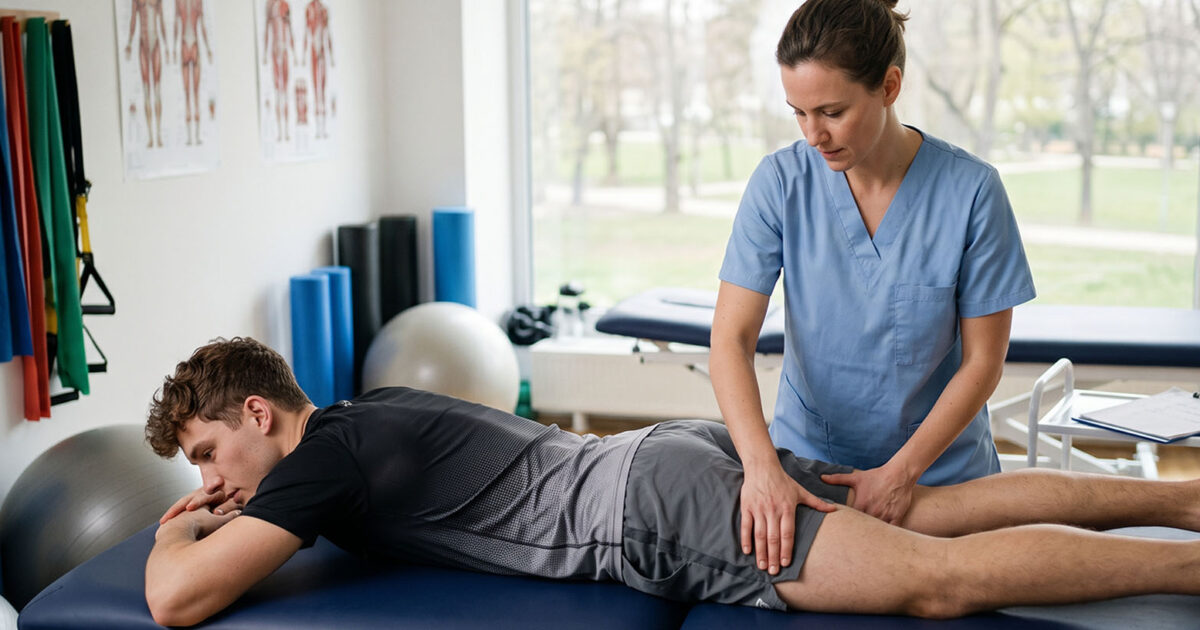
Long gone are the days when people only turned to physios due to injuries. Nowadays, many also do it to improve fitness performance, movement quality, and even recovery from physical effort.
It’s a bit like training: sometimes progress comes from adding more weight to the bar, and sometimes it comes from correcting smaller things that are holding you back.

How can physiotherapy help you break a workout plateau?
Plateaus can have several causes, one of them being small limitations you don’t immediately notice. Tight ankles can affect squat depth; limited shoulder mobility can alter pressing mechanics; a weaker side of the body might force the other side to compensate.
Over time, these small inefficiencies can affect performance, increase fatigue, and make progress harder. Physiotherapy helps identify those limitations and improve the way your body moves, allowing training to feel smoother and more efficient again.
1 – By improving movement efficiency
Sometimes the issue isn’t strength; it’s technique. Small imbalances in movement can waste energy and increase stress on joints and muscles.
A physiotherapist can help improve posture, stability, and control so that your body works with you rather than against you. That can make a noticeable difference in exercises like squats, presses, and running.
At Mediphysio, sessions usually begin with a movement assessment and a closer look at your training habits and goals. From there, treatment may include mobility work, strength exercises, movement corrections, and load management strategies to help your body perform better.
2 – By addressing imbalances before they become injuries
The body is very good at adapting. If one area is weaker or more restricted, another will usually compensate for it.
That might help in the short term, but over time it can create imbalances, overuse, and discomfort that affect performance. Physiotherapy helps identify these patterns early and correct them before they become bigger problems.
3 – By helping you recover better
Training puts stress on the body. Progress only happens when recovery keeps up with that stress.
If you constantly feel sore, fatigued, or stiff, your body may never fully adapt to your training load. Physiotherapy can support recovery through mobility work, active recovery strategies, massage techniques, and better load management.
Breaking a plateau isn’t always about doing more. Sometimes it’s about moving better, recovering smarter, and understanding your body a little more.
This article is part of a series written in collaboration with Mediphysio, your physiotherapy practice in Vienna, to share tips and insights to help you train and move better.